

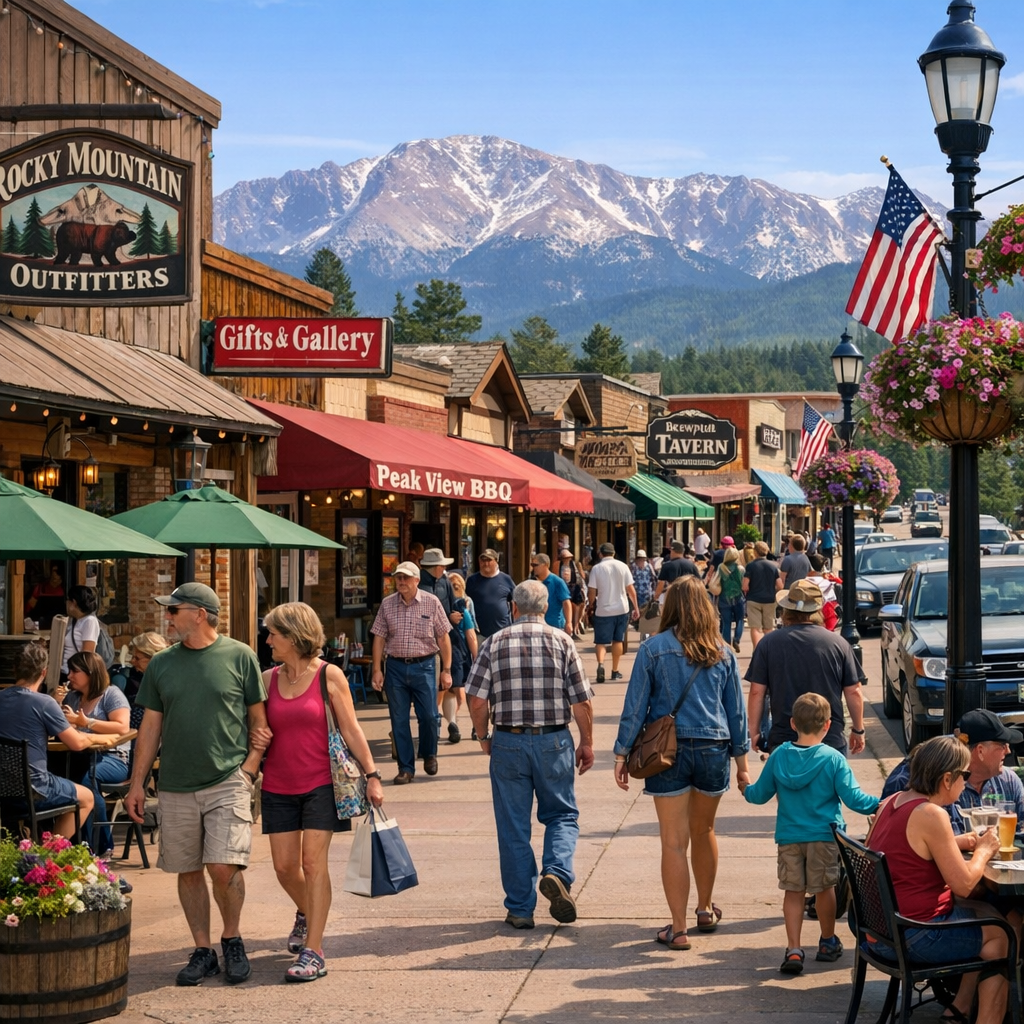
Woodland Park, Colorado, often referred to as “The City Above the Clouds,” offers a unique economic environment that balances its rich history with modern growth. This article delves into the city’s economic dynamics, focusing on local businesses, demographic trends, and development initiatives.
Demographic and Economic Overview
As of 2024, Woodland Park’s population was estimated at 7,949, making it the 91st most populated city in Colorado. The city boasts a median household income of $99,238, reflecting a prosperous community. The largest racial/ethnic groups are White (83.3%), Hispanic (9.6%), and Two or More Races (4.8%).
Local Business Landscape
Woodland Park’s economy is characterized by a mix of local businesses and national chains. The downtown area, particularly along West Midland Avenue, is home to numerous family-owned shops and eateries. Notable establishments include Hungry Bear, known for its all-day breakfast, and Fiesta Mexicana, offering authentic Latino cuisine. The city’s commitment to supporting local businesses is evident through initiatives like the Woodland Park Convention & Visitors Bureau, which, in partnership with Colorado Buys Local, invests in local small businesses to promote growth and sustainability.
Economic Development Initiatives
The Greater Woodland Park Chamber of Commerce has been instrumental in attracting and growing businesses. Over the past two decades, the Chamber has welcomed major retailers and new franchises, enhancing the variety of products available locally and reducing retail leakage. Additionally, the Chamber supports small business retention through events, façade improvements, and infrastructure projects like the downtown parking structure. These efforts have positioned Woodland Park as a regional hub for retail, dining, and services.
Tourism and Seasonal Impact
Tourism plays a significant role in Woodland Park’s economy. The city’s scenic beauty and outdoor recreational opportunities attract visitors year-round. Events like the Woodland Park Farmers Market, running from June through September, draw both residents and tourists, boosting local businesses. Seasonal activities, such as leaf peeping in the fall, also contribute to increased patronage for restaurants and shops, providing a vital economic boost before the slower winter months.
Looking Ahead
Woodland Park continues to balance its historical charm with economic growth. Ongoing development projects, support for local businesses, and a focus on tourism ensure that the city remains a vibrant and prosperous community. As Woodland Park evolves, it maintains its commitment to preserving the unique character that makes it a cherished place for residents and visitors alike.