

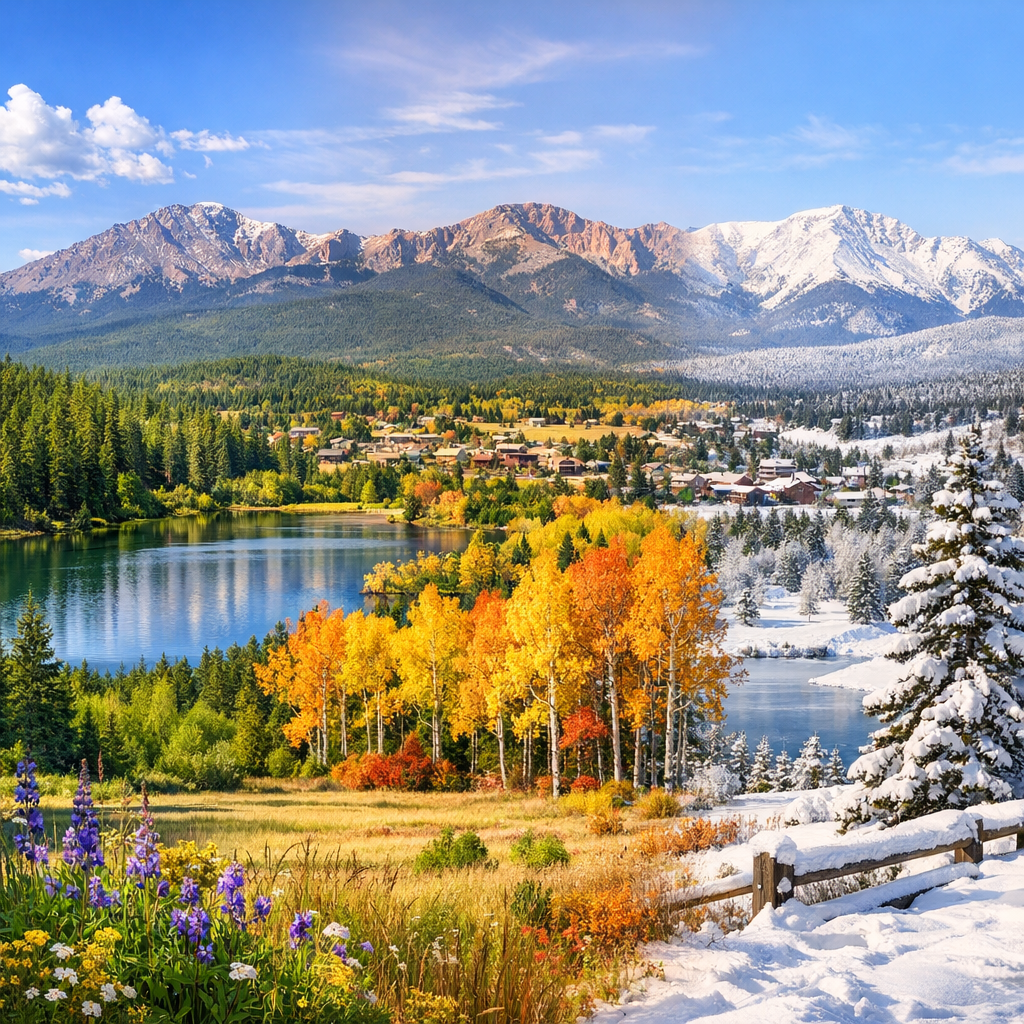
Woodland Park, Colorado, nestled in the foothills of the Rocky Mountains, experiences a diverse climate characterized by four distinct seasons. Understanding these patterns can help residents and visitors prepare for the varying weather conditions throughout the year.
Spring: A Season of Transition
Spring in Woodland Park is marked by fluctuating temperatures and increased precipitation. Average high temperatures rise from the mid-40s°F (7°C) in March to the low 60s°F (16°C) by May. This period also sees a mix of rain and snow, with May typically receiving around 2.93 inches (74 mm) of precipitation. The melting snow and spring rains contribute to the lush greenery that begins to emerge during this season.
Summer: Warm Days and Cool Nights
Summers are generally warm and pleasant, with average high temperatures peaking at approximately 75°F (24°C) in July. Despite the warmth, the low humidity levels make the heat more comfortable. Nights remain cool, often dropping to the low 50s°F (10-12°C), providing a refreshing contrast to the daytime warmth. July and August are also the wettest months, each averaging around 3.5 inches (89 mm) of rainfall, often in the form of afternoon thunderstorms.
Fall: Crisp Air and Vibrant Foliage
Autumn brings cooler temperatures and a decrease in precipitation. Average highs drop from the mid-60s°F (18°C) in September to the mid-40s°F (7°C) by November. This season is renowned for its vibrant fall foliage, as the aspen trees turn brilliant shades of gold and orange, attracting nature enthusiasts and photographers alike.
Winter: Cold and Snowy
Winters are cold and snowy, with average high temperatures in the mid-30s°F (1-2°C) and lows often dipping into the teens (-9 to -7°C). Snowfall is significant, averaging around 89 inches (226 cm) annually, providing ample opportunities for winter sports and activities. The combination of cold temperatures and snowfall creates picturesque winter landscapes, though residents should be prepared for occasional heavy snowstorms.
Environmental Considerations
Woodland Park’s high elevation and proximity to mountainous terrain contribute to its unique climate. The area receives abundant sunshine year-round, averaging 245 sunny days annually. However, the dry conditions, especially in late spring and early summer, can increase the risk of wildfires. Residents are encouraged to stay informed about fire restrictions and practice fire safety measures during these periods.
Understanding Woodland Park’s climate is essential for both residents and visitors to make the most of what each season has to offer. Whether it’s enjoying the summer warmth, witnessing the fall colors, participating in winter sports, or observing the spring bloom, each season provides unique experiences in this beautiful mountain community.